Howdy folks, I finally figured out how to add the Google Follow function to the new Sand Holler blog. If you would like to continue reading about the farm adventures, updated every Monday, Wednesday and Friday, go to our new website and look on the right column for 'Sign In' with the Google logo.
http://sandhollerfarm.com/blog/
Gasp. I've also created a Facebook page if you would rather receive updates that way. I swore I would never do it, but it's happened! Just search for us there, "like" the farm and get blog posts pushed to your news feed! (I think...I'm new to the whole thing!)
Thanks for reading folks. I miss your comments - come on over to the new blog!

Tuesday, June 14, 2011


Monday, May 16, 2011
New website and blog home!
We've completely redesigned the website and updated all the content. A lot has changed on the farm since first making the site a few years ago. We are pretty happy with the way things look over there!
www.sandhollerfarm.com
Also, the blog is now premanently relocated to the regular Sand Holler website. This will be the last post over here at blogger. But keep reading about our adventures on the new blog!
New Sand Holler Blog!
I haven't quite yet been satisfied with any "feeds" or "follows" for the new site but do stay tuned as I hope to be adding that feature there soon!
www.sandhollerfarm.com
Also, the blog is now premanently relocated to the regular Sand Holler website. This will be the last post over here at blogger. But keep reading about our adventures on the new blog!
New Sand Holler Blog!
I haven't quite yet been satisfied with any "feeds" or "follows" for the new site but do stay tuned as I hope to be adding that feature there soon!
Sunday, May 8, 2011
More and more babies!
More babies are coming along every day now! Shellie was the first with the triplets and now we have six more. We still have one goat past her due date so any day now. Things have been crazy (like every spring...), so I don't have too many pictures downloaded yet to show off.
But speaking of showing off, I thought I would at least post a picture of the proud Papa of about half the goatlings this year. The last two years, we've bred to Valentino but finally decided we needed some new blood in the works, so along came Cinnamon! He was a bit of a beast and spent much of his time on the roof of the barn!

And speaking of being a beast...Willa spent much of the weekend pestering the new garden guineas. She loved to make them squawk and send up their alarm call!

In other news...ok, you're going to think we are crazy. Here goes. We had a "sighting" at the farm. It might as well have been an alien spaceship for all the incredulity. A large, 100 poundish, spotted cat jumped out of the creek bed and walked slowly across the road to the neighbor's property. Yeah....we are talking jaguar or leopard. My brother, who saw it, is leaning towards jaguar. He is probably the only person I would believe who came to me with reports of a jaguar wandering around the farm. Apparently it was well fed, so we are assuming escaped pet or zoo critter. We even have a zoo 10 miles away but they claim to have never had a spotted cat in their collection (establishing deniability for liability reasons!? :P). So....could this have been on the farm?!?!?

But speaking of showing off, I thought I would at least post a picture of the proud Papa of about half the goatlings this year. The last two years, we've bred to Valentino but finally decided we needed some new blood in the works, so along came Cinnamon! He was a bit of a beast and spent much of his time on the roof of the barn!
And speaking of being a beast...Willa spent much of the weekend pestering the new garden guineas. She loved to make them squawk and send up their alarm call!

In other news...ok, you're going to think we are crazy. Here goes. We had a "sighting" at the farm. It might as well have been an alien spaceship for all the incredulity. A large, 100 poundish, spotted cat jumped out of the creek bed and walked slowly across the road to the neighbor's property. Yeah....we are talking jaguar or leopard. My brother, who saw it, is leaning towards jaguar. He is probably the only person I would believe who came to me with reports of a jaguar wandering around the farm. Apparently it was well fed, so we are assuming escaped pet or zoo critter. We even have a zoo 10 miles away but they claim to have never had a spotted cat in their collection (establishing deniability for liability reasons!? :P). So....could this have been on the farm?!?!?

Wednesday, April 13, 2011
Just "Kidding" Around
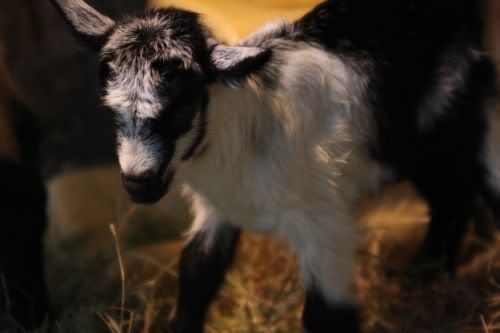
The first of this spring’s kids finally arrived last week! Shelli gave birth to triplets – Beatrice, Baxter, and Bartholomew…can you tell that we have a “B” theme this year? Despite the first kid coming out in the wrong position, the birth went well and the kids are growing like weeds. Unlike some other baby animals (I'm thinking puppies), goat kids are incredibly cute the instant they are born. They were all wagging their tails and investigating their surroundings in a matter of minutes. Here are some photos!


Friday, April 1, 2011
Shearing Day
Tuesday was shearing day for the sheep at Sand Holler. This was my first experience with sheep shearing and I was surprised to learn how difficult it can be to find an experienced shearer. The shearer that we found doesn’t live in Texas, but travels through a few times a year going from farm to farm. I also learned that the quality of the fleece you get depends, in part, on the skills of the shearer. A good shearer doesn’t make “second cuts” – that is, they clip the whole length of the fiber off in one go and don’t have to clip the same spot twice. When the fiber is processed, the shorter pieces are often discarded because they are not suitable for spinning. Now that we have all this nice fiber the question is…what’s next? With any luck, we’ll be able to post a photo of a Sand Holler wool rug before the next shearing. Marissa - Do you still have that drop spindle?
Linden was ready for his haircut! Being a sheep in central Texas gets hot.

Two minutes later..."Whoa, what happened?!"

Who knew Morus looked like a Dalmation under all that fleece?

Desi, our ram, doesn't look nearly as intimidating without his wooly coat.

Bags of fleece ready for processing!

Tuesday, March 15, 2011
Greens and goat cheese ravioli
This week we ventured yet again to the delightful neighborhood cheese shop in Hyde Park - Antonelli's. It was mainly to get their wonderful parmesan but we can't really get away from trying a few cheeses anytime you pop in. Their latest newsletter had informed me of two new arrivals that I wanted to try - Ewephoria (a sheep milk cheese of course!) and a Wensleydale. The Ewephoria is a gouda-style cheese from Holland...and it is delicious. Still nutty like many sheep cheeses, this one has more sweetness and less of the typical untamed gaminess of other sheep cheeses I've tried. So of course, that came home with us too! The Wensleydale wasn't too Chad's liking - I think mostly because we tried it after the Ewephoria. But before we can sneak out of the shop with just one extra thing than we had intended, John pulled out a flavored soft cheese that wowed us both. Now, everyone in the shop knows Chad doesn't like goat cheese - and that's preciously why John didn't tell us what it was before we tried it. It's the first batch of Pure Luck Dairy 'June's Gold'. A simple chevre mixed with honey, thyme, and cracked pepper. Marvelous! So I convinced him to give it a go at home and make something with it. This is what we ended up with:
Greens and Goat Cheese Ravioli serves 4
Filling:
14 ounces greens - spinach or chard for a mild taste, we added in about 1/3 broccoli leaves (can use kale too!)
1 egg
1 tsp salt
1/2 cup grated parmesan
3/4 cup goat cheese
1 tsp dried thyme
1/4 tsp cracked pepper
drizzle of honey
Pasta:
You can use any recipe you like - I've been working with this one lately: "Homemades"
You can make the filling while letting the pasta rest.
1. Rinse greens and cook over medium heat with just the water clinging to the leaves. For spinach cook for about 5 minutes, for other thicker greens, cook for 10 minutes. You want them well done. Let the greens cool and squeeze out any excess water. Chop finely.
2. In a bowl, mix the greens with the rest of the filling ingredients.
3. Fill the ravioli (for instance, using this technique) and spread on a floured surface for 30 minutes, turning over once or twice to let them dry.
4. Boil salted water and cook for 5 minutes.
5. Dot with butter and chopped sage. YUM!
Greens and Goat Cheese Ravioli serves 4
Filling:
14 ounces greens - spinach or chard for a mild taste, we added in about 1/3 broccoli leaves (can use kale too!)
1 egg
1 tsp salt
1/2 cup grated parmesan
3/4 cup goat cheese
1 tsp dried thyme
1/4 tsp cracked pepper
drizzle of honey
Pasta:
You can use any recipe you like - I've been working with this one lately: "Homemades"
You can make the filling while letting the pasta rest.
1. Rinse greens and cook over medium heat with just the water clinging to the leaves. For spinach cook for about 5 minutes, for other thicker greens, cook for 10 minutes. You want them well done. Let the greens cool and squeeze out any excess water. Chop finely.
2. In a bowl, mix the greens with the rest of the filling ingredients.
3. Fill the ravioli (for instance, using this technique) and spread on a floured surface for 30 minutes, turning over once or twice to let them dry.
4. Boil salted water and cook for 5 minutes.
5. Dot with butter and chopped sage. YUM!
Thursday, February 10, 2011
GMO Alfalfa
Genetically Engineered Alfalfa On the Way
Our goats eat a lot of alfalfa - it's what makes their milk so sweet. We have yet to find a source of local/organic/sustainable alfalfa (it isn't grown in this part of the country commercially). We just buy what's at the feedstore and don't know much about its origin. And now we have something else to worry about...here's a message from Scott:

Our goats eat a lot of alfalfa - it's what makes their milk so sweet. We have yet to find a source of local/organic/sustainable alfalfa (it isn't grown in this part of the country commercially). We just buy what's at the feedstore and don't know much about its origin. And now we have something else to worry about...here's a message from Scott:
Sigh.Ever heard of Percy Schmeiser?
Some of Monsanto's GMO canola seeds blew onto his family farm in Canada and sprouted. When Monsanto found out about it, they sued him for patent infringement, even though he was completely innocent. The case went all the way to the Canadian Supreme Court and cost Schmeiser his life savings. The final decision was a draw. Schmeiser didn't have to pay Monsanto but they retained their patent…and thus the ability to treat the next guy exactly the same way.
The new GMO alfalfa approval seems like a horrible magnification of exactly the same problem. Apparently alfafa pollen is carried by bees and other insects over a distance of several miles. This means every alfalfa field will be contaminated with the stuff before long and Monsanto….bless their black little corporate heart….will be able to sue hundreds of folks for patent infringement. It would easily drive an honest hard-working farmer out of business.
Since Secretary Vilsack has already given the approval for GMO alfalfa, it seems like the only recourse is to appeal to the President. I have already written him
and encourage yall to do the same.

Monday, January 31, 2011
Eating Animals
Many of us at Sand Holler Farm are vegetarian. We all have a different story on how we came to this dietary state. I just recently finished a book by Jonathan Safran Foer (author of Everything is Illuminated) about his journey to committing to this diet after waffling back and forth for much of his life. It was an interesting and entertaining read - if not somewhat gruesome at times. Eating Animals does not provide any earth shattering revelations or even much information that is not currently available to anyone who cares to do a bit of research about their food. But I still think it's an important book for people to read - people of all dietary persuasions.
The book's main focus is the horrendous treatment of animals in factory farmed situations - I feel that this fact cannot be repeated too often. Consumers should be demanding a product that does not force animals into this kind of situation. It is hard for me to imagine that people are willing to continue to support this industry...ah, but I forget! The Almighty Dollar rules our lives. But it rules the lives of corporations too. Vote with your dollars - send them to sustainably raised meat!
Foer, on the other hand, advocates a vegetarian diet as the answer. He does not even believe that being an "ethical carnivore" is even a possibility. I disagree however. When raising food animals, there will always be compromises to be made (causing pain by disbudding in order to prevent future injuries, or castrating to prevent unwanted breeding) but I think that there are plenty of small farms that are doing the best possible. With more support for them, that industry can grow and hopefully again replace the factory farms that are currently dominating meat production.
His views, and the views of some he portrays in the book, can be a bit extreme for my tastes, but it's worth hearing their opinion. Go ahead, check it out!

The book's main focus is the horrendous treatment of animals in factory farmed situations - I feel that this fact cannot be repeated too often. Consumers should be demanding a product that does not force animals into this kind of situation. It is hard for me to imagine that people are willing to continue to support this industry...ah, but I forget! The Almighty Dollar rules our lives. But it rules the lives of corporations too. Vote with your dollars - send them to sustainably raised meat!
Foer, on the other hand, advocates a vegetarian diet as the answer. He does not even believe that being an "ethical carnivore" is even a possibility. I disagree however. When raising food animals, there will always be compromises to be made (causing pain by disbudding in order to prevent future injuries, or castrating to prevent unwanted breeding) but I think that there are plenty of small farms that are doing the best possible. With more support for them, that industry can grow and hopefully again replace the factory farms that are currently dominating meat production.
His views, and the views of some he portrays in the book, can be a bit extreme for my tastes, but it's worth hearing their opinion. Go ahead, check it out!
Thursday, January 20, 2011
Hello Again from Sand Holler!
While there has been a long absence of blog posts, there has certainly been no shortage of news at Sand Holler Farm! Between baby Willa, a full-time job, the holidays, and the constant demands of the farm, Marissa was in need of some reinforcements to keep the blog updated. That’s where I come in! My name is Jessica and my husband, Alex, and I moved out to the farm this past October. We were brought in to relieve Dale of the animal chores on the weekends (I guess he deserves SOME time off) and to make CSA deliveries. We’re excited to be a part of Sand Holler and I’m happy to be taking on some new responsibilities, including this blog!
Here is a brief update of farm happenings from the past few months:
We got one new four-legged addition this fall. Kitten, a lamb, was born on Alex and I’s first night here. Talk about a good omen! You can hardly call her a lamb anymore, although she is still very attached to Cat, her mama.

Harvest House and "Pre-Freeze" Garden
The biggest change on the farm has to be the completion of the “Harvest House”, the charming new focal point of the garden. This multi-purpose building has a generous area to wash and sort produce, storage for garden tools, and a small apartment for interns and WWOOF volunteers. With the winter providing limited produce, however, the work space has largely been used for sewing row covers to protect our crops during freezes. Our latest WWOOF volunteers, August and Marion, have proved themselves to be masters of the sewing machine and all of our rows are now sporting new, easily-deployed covers. The design is a vast improvement from last year’s and we are all very grateful to be able to “button up” the garden in a matter of minutes!

The garden is all tucked in and ready to brave another cold night!
Envelopes of seeds have been steadily arriving in the mail, bringing with them excitement for spring planting. While the garden has an abundance of kale, collards, and mustard, I think we are all ready for something besides greens! The garden is looking great thanks to the many helping hands we’ve had over the past few months, including Evan, Nicole, Austin, Keely, (another) Jessica, and, as always, Dale. Talk about Community Supported Agriculture! Cold hardy crops, such as beets, carrots, and lettuces have already been planted and should be ready for harvest soon.
Two of the goats have found new homes. Dandelion and Miranda have both been sold to families that have started home dairies. Five of the six remaining does have been bred and will start kidding in April. Here’s hoping for a less eventful kidding than last year!
Thursday, August 26, 2010
Egg Recall
While sitting down to my eggful breakfast this morning, my ears perked up when I heard something about the wonderful food on the radio. They were talking about making sure your yolks are cooked COMPLETELY through and even about pasteurizing eggs. Pffft. I took a bit of my ooey gooey fried egg on toast (ciabatta from Texas French Bread!). But then the story went on and I realized this wasn't just a 'food safety expert' scaring everyone. There's an egg recall!!! (yes, I do typically live under a rock...remember I have a 4 month old!)
While some experts say that small-producer, free range eggs aren't any safer from salmonella contamination, I have to wonder. Perhaps statistically, the eggs from a small farmer are just as likely to be contaminated, but the fact is, there simply can't be a HUGE outbreak because of their size. Our centralized food system is what causes these devastating outbreaks that has people all over the country (or at least in 16 states this time), dumping food for fear it's going to make them sick!
The two farms that are indicated in the outbreak aren't selling their recently laid eggs in the carton. Instead, they are being shipped to a "breaking plant" where the eggs will be pasteurized and sold as liquid eggs. That's great that not all that food will go to waste, but it seems more like a band-aid than a true fix to the problem. How do we stop massive outbreaks in the first place?
While some experts say that small-producer, free range eggs aren't any safer from salmonella contamination, I have to wonder. Perhaps statistically, the eggs from a small farmer are just as likely to be contaminated, but the fact is, there simply can't be a HUGE outbreak because of their size. Our centralized food system is what causes these devastating outbreaks that has people all over the country (or at least in 16 states this time), dumping food for fear it's going to make them sick!
The two farms that are indicated in the outbreak aren't selling their recently laid eggs in the carton. Instead, they are being shipped to a "breaking plant" where the eggs will be pasteurized and sold as liquid eggs. That's great that not all that food will go to waste, but it seems more like a band-aid than a true fix to the problem. How do we stop massive outbreaks in the first place?
Monday, June 28, 2010
Take that Monsanto!
I won't expound too much on my issues with Monsanto, but this piece speaks for itself.
Monsanto has developed plants that are resistant to one of their herbicides - Roundup. The vast majority of soybeans, corn and cotton grown in the US are these 'Roundup-Ready' varieties. Farmers can then douse the fields in the herbicide without fear of harming their drop. However, Mother Nature is fighting back. There are now weeds that have become immune to the herbicide and farmers are being forced into the fields with hoes. Monsanto is even paying farmers for the purchase of other herbicides!
Roundup Resistant Weeds Pose Environmental Threat
Here at Sand Holler, we never have to fear such an outcome. We don't use herbicides - we are already out there with hoes in hand! We strive towards a system that is as sustainable as possible. We improve the health of the soil and plant vegetable varieties appropriate for our conditions. If everyone took this approach, we could greatly reduce the amount of chemicals - organic or not - that are sprayed on crops and end up in other parts of our environment.
Ripening Tomatoes: grown without 'benefit' of concentrated chemicals

Monsanto has developed plants that are resistant to one of their herbicides - Roundup. The vast majority of soybeans, corn and cotton grown in the US are these 'Roundup-Ready' varieties. Farmers can then douse the fields in the herbicide without fear of harming their drop. However, Mother Nature is fighting back. There are now weeds that have become immune to the herbicide and farmers are being forced into the fields with hoes. Monsanto is even paying farmers for the purchase of other herbicides!
Roundup Resistant Weeds Pose Environmental Threat
Here at Sand Holler, we never have to fear such an outcome. We don't use herbicides - we are already out there with hoes in hand! We strive towards a system that is as sustainable as possible. We improve the health of the soil and plant vegetable varieties appropriate for our conditions. If everyone took this approach, we could greatly reduce the amount of chemicals - organic or not - that are sprayed on crops and end up in other parts of our environment.
Sunday, June 27, 2010
Bring on the peppers!
Our pepper plants are really taking off. It's great to see the summer veggies continue to roll in. Unfortunately our squash is still suffering. Now that we have finally gotten the squash bugs and borers under control, we have mosaic virus! I'm not sure we will get any at all...
No goat emergencies this week. In fact, everyone is doing much better. Shelli is completely over the infection and we finally think Savannah is on the road to recovery. Whew!
Full Baskets
Celebrity Tomatoes
Big Rainbow Tomatoes
Bell Peppers
Hungarian Wax Peppers
Slicing Cucumbers
Garlic
Red Norland Potatoes
Cantaloupe
Half Baskets
Yellow Pear Tomatoes
Big Rainbow Tomatoes
Ichiban Eggplant
Poblano Peppers
Hungarian Wax Peppers
Slicing Cucumbers
Cantaloupe
Clemson Spineless Okra
No goat emergencies this week. In fact, everyone is doing much better. Shelli is completely over the infection and we finally think Savannah is on the road to recovery. Whew!
Full Baskets
Celebrity Tomatoes
Big Rainbow Tomatoes
Bell Peppers
Hungarian Wax Peppers
Slicing Cucumbers
Garlic
Red Norland Potatoes
Cantaloupe
Half Baskets
Yellow Pear Tomatoes
Big Rainbow Tomatoes
Ichiban Eggplant
Poblano Peppers
Hungarian Wax Peppers
Slicing Cucumbers
Cantaloupe
Clemson Spineless Okra
Wednesday, June 23, 2010
Caprine Calamaties
Our trouble with goats continues. Last year the worst problems we had were the girls knocking heads and getting cut on their scurs. This year the problems seem nearly endless.
Savannah has an infection in her udder - mastitis. We are currently treating it very aggressively. Many times we treat a goat that isn't feeling well with a more holistic and supportive approach and they are able to get back on their feet by the next day like nothing happened. But we are going full Western medicine on Savannah since she has been so sick. She has gotten shots of antibiotics and a different antibiotic infused in her udder. She has had a fever for almost a week but it looks like it might finally have broken...just in time for her twin Shelli to come down with similar symptoms. This time we aren't waiting the lengthy 4 days to get the lab results back and are treating it as if it's the same infection. Shelli's fever is already down. I think we caught it very early. But a sick goat is truly a sad thing to see - their normally perky ears hang limply on the side of their head, they mope around and their rumen becomes less active making them look like they've lost 20 pounds overnight.
(by the way, we never use the milk of a goat that appears to be sick or is on medication)
But that's not all. The two boys who were castrated last week still at like they are in terrible pain and won't come anywhere near me - though they frolic right up to Dale. Guess they recall exactly who put those rubber bands around their 'equipment' (and they've apparently been gossiping - the other two intact boys are also afraid of me now!). But they will get over it eventually.
And then on Saturday 3 of the kids got the runs. This can be very serious in goats. We quickly gave them the medication for the worst of the causes since we'd rather be safe than sorry. They do appear to be getting better now. But it was rough for awhile. And let me tell you, trying to squirt bad tasting medicine in the mouths of 9 kid goats that don't want it, can be quite difficult!
Little Lily was spared the intestinal upset.

Lastly there was a freak accident on Sunday. Dale was taking some people to see the kids when he noticed that Lark looked to be stuck in the hay manager. Thistle, arguably the stupidest goat in Texas, gets his head "stuck" regularly. It's not really stuck - there's plenty of room for him to get his head out. He just doesn't know that. We have to help guide his head back so he can be free. But Lark hadn't done this before. He suddenly pulled back and was free....but there was a wire sticking out of his eye!!! By the time Dale caught him, Pops had come to fetch me to help. The wire had fallen out on its own but it was obvious that it had gone through both his upper and lower eyelid. Somehow his eye completely avoided damage. And when I say "wire" I don't mean something thin like a coat hanger - think more like USB cable (hey, it's the only thing in my field of view that fits!). We cleaned the wound and gave him an anti-inflammatory and painkiller...and hoped. It did swell, but it was already reduced by the next day and he is acting perfectly fine. Whew.
But what's in store for us next week?!?! I can't even imagine...
Savannah has an infection in her udder - mastitis. We are currently treating it very aggressively. Many times we treat a goat that isn't feeling well with a more holistic and supportive approach and they are able to get back on their feet by the next day like nothing happened. But we are going full Western medicine on Savannah since she has been so sick. She has gotten shots of antibiotics and a different antibiotic infused in her udder. She has had a fever for almost a week but it looks like it might finally have broken...just in time for her twin Shelli to come down with similar symptoms. This time we aren't waiting the lengthy 4 days to get the lab results back and are treating it as if it's the same infection. Shelli's fever is already down. I think we caught it very early. But a sick goat is truly a sad thing to see - their normally perky ears hang limply on the side of their head, they mope around and their rumen becomes less active making them look like they've lost 20 pounds overnight.
(by the way, we never use the milk of a goat that appears to be sick or is on medication)
But that's not all. The two boys who were castrated last week still at like they are in terrible pain and won't come anywhere near me - though they frolic right up to Dale. Guess they recall exactly who put those rubber bands around their 'equipment' (and they've apparently been gossiping - the other two intact boys are also afraid of me now!). But they will get over it eventually.
And then on Saturday 3 of the kids got the runs. This can be very serious in goats. We quickly gave them the medication for the worst of the causes since we'd rather be safe than sorry. They do appear to be getting better now. But it was rough for awhile. And let me tell you, trying to squirt bad tasting medicine in the mouths of 9 kid goats that don't want it, can be quite difficult!
Lastly there was a freak accident on Sunday. Dale was taking some people to see the kids when he noticed that Lark looked to be stuck in the hay manager. Thistle, arguably the stupidest goat in Texas, gets his head "stuck" regularly. It's not really stuck - there's plenty of room for him to get his head out. He just doesn't know that. We have to help guide his head back so he can be free. But Lark hadn't done this before. He suddenly pulled back and was free....but there was a wire sticking out of his eye!!! By the time Dale caught him, Pops had come to fetch me to help. The wire had fallen out on its own but it was obvious that it had gone through both his upper and lower eyelid. Somehow his eye completely avoided damage. And when I say "wire" I don't mean something thin like a coat hanger - think more like USB cable (hey, it's the only thing in my field of view that fits!). We cleaned the wound and gave him an anti-inflammatory and painkiller...and hoped. It did swell, but it was already reduced by the next day and he is acting perfectly fine. Whew.
But what's in store for us next week?!?! I can't even imagine...
Monday, June 21, 2010
It's truly summer!
Happy Summer everyone! In case the hot weather hadn't clued you in to the season change yet, the longest day of the year occurred yesterday, marking the official start of the summer. And with the new season comes new vegetables!
And for the start of the hottest time of the year, we now have the cheese kitchen AIR CONDITIONED!!! Yes, I have made all the cheeses in a small metal building with no AC or windows and the stove on full blast last summer and this year. Not fun. And as mentioned previously, air temperature can effect the cheese making process. So now we have one more variable under control - and it will allow me to make some cheeses that require longer incubation times at temperatures less than 100F (seriously, we have a thermometer in there and it regularly gets over 100F...). Yeah!
Full Baskets
Cardinal Basil
Roma Tomatoes
Purple Cherokee Tomatoes
Clemson Spineless Okra
Kirby cucumbers
Country Gentlemen Sweet Corn
Purple Beans
Ichicban Eggplants
Poblano Peppers
Half Baskets
Cardinal Basil
Roma Tomatoes
Purple Cherokee Tomato
Clemson Spineless Okra
Kirby cucumbers
Red Norland Potatoes
Butter Beans
Jalapeno Peppers
Garlic
Roasted Okra
This is a delicious way to cook okra that I only recently discovered. If you think you don't like the vegetable, try it this way!
Preheat the oven to 450F. Coat a baking sheet with olive oil and drizzle a little on the okra. Sprinkle with salt. Bake for 15 minutes, turning them every 5 minutes. They should be browned in a few places and slightly crisp. Excellent!
And for the start of the hottest time of the year, we now have the cheese kitchen AIR CONDITIONED!!! Yes, I have made all the cheeses in a small metal building with no AC or windows and the stove on full blast last summer and this year. Not fun. And as mentioned previously, air temperature can effect the cheese making process. So now we have one more variable under control - and it will allow me to make some cheeses that require longer incubation times at temperatures less than 100F (seriously, we have a thermometer in there and it regularly gets over 100F...). Yeah!
Full Baskets
Cardinal Basil
Roma Tomatoes
Purple Cherokee Tomatoes
Clemson Spineless Okra
Kirby cucumbers
Country Gentlemen Sweet Corn
Purple Beans
Ichicban Eggplants
Poblano Peppers
Half Baskets
Cardinal Basil
Roma Tomatoes
Purple Cherokee Tomato
Clemson Spineless Okra
Kirby cucumbers
Red Norland Potatoes
Butter Beans
Jalapeno Peppers
Garlic
Roasted Okra
This is a delicious way to cook okra that I only recently discovered. If you think you don't like the vegetable, try it this way!
Preheat the oven to 450F. Coat a baking sheet with olive oil and drizzle a little on the okra. Sprinkle with salt. Bake for 15 minutes, turning them every 5 minutes. They should be browned in a few places and slightly crisp. Excellent!
Monday, June 14, 2010
Goats are a handful
The past week has been full of goat "fun". First, Matilda, our unbred doe gave birth! I promised to post pictures and write up the whole story early but of course got busy with all sorts of other things. The short version - the breeder still swears that there is no way Matilda could have been bred at her place...but the little baby looks just like his daddy so we know somehow the deed was done!
That little buck was disbudded this weekend - a chore that is not pleasant, even if you aren't the one doing it. Our disbudder also taught me how to 'band' the older boy goats - the bloodless way of castration. It was easy enough and I was able to do it after being shown. But then the boy goats truly acted like they were dying. It was hard to watch. Another part of owning livestock though.
And finally, our much beloved Savannah (Nanna Goat) is sick. We still aren't sure what's wrong with her but she stopped eating on Saturday and spiked a 107 degree fever (normal for goats can be as high as 103.5). We've given her all the supportive care we can over the weekend until we could send samples to the lab and consult with a vet. She seems to be doing better but isn't out of the woods yet. It was a rough weekend.
Shelli peaking out of the barn wondering what kind of angst to give us next.

But farming goes on. Weeds in the garden don't take the day off when we spend that time working with the goats! Our second batch of squash is looking like it will make it. We've had a few casualties from the squash bugs but many of the plants are strong and vigorous. The cucumbers and melons (also tasty to squash bugs) seem to be holding their own too! So it looks like we may be winning!
Here's what's likely to be in your box this week:
Herb of the week: Sage
All baskets:
Half baskets:
Full baskets:
Greek Cucumber Salad
Whisk together the dressing ingredients (without the cheese) and toss with the drained cucumbers. Sprinkle with feta and enjoy!
That little buck was disbudded this weekend - a chore that is not pleasant, even if you aren't the one doing it. Our disbudder also taught me how to 'band' the older boy goats - the bloodless way of castration. It was easy enough and I was able to do it after being shown. But then the boy goats truly acted like they were dying. It was hard to watch. Another part of owning livestock though.
And finally, our much beloved Savannah (Nanna Goat) is sick. We still aren't sure what's wrong with her but she stopped eating on Saturday and spiked a 107 degree fever (normal for goats can be as high as 103.5). We've given her all the supportive care we can over the weekend until we could send samples to the lab and consult with a vet. She seems to be doing better but isn't out of the woods yet. It was a rough weekend.
But farming goes on. Weeds in the garden don't take the day off when we spend that time working with the goats! Our second batch of squash is looking like it will make it. We've had a few casualties from the squash bugs but many of the plants are strong and vigorous. The cucumbers and melons (also tasty to squash bugs) seem to be holding their own too! So it looks like we may be winning!
Here's what's likely to be in your box this week:
Herb of the week: Sage
All baskets:
Detroit Dark Red Beets: I expect all our subscribers to have strong healthy blood after all these vitamin packed beets.
Cucumbers: The heat can make cucumber skins bitter. Peeling easily remedies this problem,
Tomatoes: The big ol' suckers are Brandywine heirloom tomatoes. These are delicate fruits and bruise easily. Any bruises can just be cut out - the rest of the flesh is fine. The tomatoes are on the top of your basket - be sure to rescue them quickly so they don't get crushed!
Italian Parsley: The parsley is getting strong in the heat - you might need to use less than usual to get the same flavor.
Poblanos: Most poblanos are pleasantly mild...but beware that an occasional pepper can really kick you in the pants. It's completely random and you never know what you are going to get!
Half baskets:
Ichiban Eggplant: Want to try a new eggplant dish? Give Baba ghanoush a try!
Full baskets:
Potato Medley: Yes, those are blue potatoes!
Fresh Garlic: Sand Holler Farm, helping keep vampires at bay since 2008.
Scarlet Nantes Carrots: An heirloom variety rich with typical carroty flavor.
Greek Cucumber Salad
Peel cucumbers. Cut in half along the length and remove seeds if they are large. Slice into quarter inch half moons, put in a colander and sprinkle with salt. Drain for 1-3 hours. For an even crisper salad, weight the draining cucumbers with either a ziplock full of water or a plate and a large glass of water during draining.
1 1/2 lbs cucumbers
1 tbsp salt
2 tbsp red wine vinegar
4 tbsp olive oil
1 garlic clove, crushed
2 tsp minced oregano
1 tbsp minced mint
2 oz feta
Whisk together the dressing ingredients (without the cheese) and toss with the drained cucumbers. Sprinkle with feta and enjoy!
Monday, June 7, 2010
Farm Baskets
Our cheeses are truly artisan farmstead cheeses. They are nothing like the mass produced cheeses at the grocery store. They are also fairly dissimilar from cheeses purchased at a farmers market as most of these are still produced in large batches. Our cheeses are made in 4 gallon batches, one at a time. That means that each and every cheese we make will be unique in flavor and texture. Subtle things such as room temperature, the diet of the goat or even the age of the rennet will change the final results. We can control many factors but the cheese will always be different. And that's the way we love it!
Our best guess for what's in the boxes for this week:
All baskets:
Half baskets:
Full baskets:
Herb of the week: Mint
Our best guess for what's in the boxes for this week:
All baskets:
Red Norland Potatoes: Still coming in! The potato season in Texas is short but plentiful. Enjoy it while it lasts!
Cucumbers: Many of the cucumbers in the boxes might not look like what you are used to - the usual long thin 'slicers' from the grocery store. These short stubby cukes are 'picklers' - which are called Kirbys when eaten fresh. A Kirby has a true and strong cucumber flavor.
Tomatoes: FINALLY! We have many many varieties planted this year and you will get a taste of them all!
Half baskets:
Fresh Garlic: Stinky hands from chopping all that delicious farm garlic? Try washing your hands under running water while rubbing a piece of stainless steel.
Wax Beans or Green Beans: This is likely to be the last of the first flush of green beans. We should have more in a few weeks!
Baby Carrots: The perfect sized snack for kids!
Full baskets:
Beets: The first beets, eaten by the Romans and Greeks, were black or white and not red.
Italian Parsley: When crushed and rubbed on the skin, parsley is said to reduce itching of mosquito bites.
Poblanos: This is the most commonly used pepper for chile rellenos.
Ichiban Eggplant: Still the only variety producing at the farm so far!
Herb of the week: Mint
Moroccan Beet Salad
Cool, peel, and cut beets into bite-size pieces. place in a serving bowl.
Mix lemon juice, garlic, cumin and salt and pepper to taste in a small bowl. Whisk in olive oil. Add to beets and toss.
Let sit a few hours and just before serving, sprinkle with parsley.
6-8 medium beetsAdd beets to boiling water in a large saucepan. Simmer until beets are tender when pierced with a fork, about 45 minutes.
1 lemon
2 cloves garlic, minced
1 tsp cumin
salt and black pepper
4 tbsp olive oil
1/2 cup chopped parsley
Cool, peel, and cut beets into bite-size pieces. place in a serving bowl.
Mix lemon juice, garlic, cumin and salt and pepper to taste in a small bowl. Whisk in olive oil. Add to beets and toss.
Let sit a few hours and just before serving, sprinkle with parsley.
Monday, May 31, 2010
Fresh from the Farm this Week
Squash bugs. Horrid little creatures. It's time to admit that we lost our entire summer squash crop. We kept thinking that this plant or that plant was going to make it. This morning, the last of the plants finally looked so bad we had to admit defeat. Sigh. We tried everything except chemical pesticides...and let me tell you, we are starting to see why they are so widely used in farming!
But we do have another set of plants currently growing. So far we have managed to protect them from the bugs but they are young yet and haven't even started blooming. So it will be a few weeks before we have any more squash...if we have any at all. What an infestation!
All baskets:
Half baskets:
Cheese of the week: Feta
Herb of the week: Oregano
Recipe:
Carrot and Beet Salad (serves 6)
8 carrots shredded
3 beets, peeled and shredded
2 garlic cloves
1/3 cup chopped parsley
1/3 cup rice vinegar
Combine all the ingredients, refrigerate for at least an hour and enjoy!
Almost ready!

But we do have another set of plants currently growing. So far we have managed to protect them from the bugs but they are young yet and haven't even started blooming. So it will be a few weeks before we have any more squash...if we have any at all. What an infestation!
All baskets:
Red Norland Potatoes: The average person eats 75 lbs of potatoes a year. We are happy to provide a small portion of your annual intake!
Cucumbers: In the late 1600s, the cucumber was thought only fit for consumption by cows...and it was actually spelled cowcumber!
Fresh Garlic: The sticky juice from the cloves is actually used to make adhesive for repairing glass and china.
Parsley: Italian in the full baskets and curly in the half baskets.
Poblanos: A delicious mild pepper from the state of Puebla, Mexico.
Half baskets:
Ichiban Eggplant: A Japanese variety, but the eggplant originates from India...and is botanically a berry!Full baskets:
Beets: Cherry red beets with light interiors are Chioggia beets. The deep dark red ones are Detroit Dark Reds.
Empress Green Beans: An excellent source of vitamin C and vitamin K.
Wax Beans: Don't worry - these aren't sickly green beans, they are supposed to be yellow!
Carrots: One of the few vegetables that are more nutritious when cooked.
Cheese of the week: Feta
Herb of the week: Oregano
Recipe:
Carrot and Beet Salad (serves 6)
8 carrots shredded
3 beets, peeled and shredded
2 garlic cloves
1/3 cup chopped parsley
1/3 cup rice vinegar
Combine all the ingredients, refrigerate for at least an hour and enjoy!
Thursday, May 27, 2010
Experimental Vegetables
When I designed the new garden layout last year I had a small area marked "experimental". I got some funny looks from Mom but she let it slide. Well, we haven't actually planted right in that area, but we have been experimenting with some new crops. Nothing for resale this year but I think we have at least one winner for a full crop next year! So what have we been up to?
Rhubarb: I think I've mentioned this one before. Rhubarb is not the most popular southern product. It's a perennial plant loves a long cool spring and a reasonable summer to grow big and healthy. Well folks, let's face it, that's not Texas! But I recently read about growing rhubarb as an annual from seed. In the north, it dies back in the winter and takes the whole spring to grow to harvestable size. But here we can protect it from frost so that it grows all winter and really takes off for the few short weeks of cool spring we have before succumbing to the inferno of summer. Well we planted a few rows of it and while we certainly made some mistakes in its care (didn't realize just how frost sensitive it was!), we actually got enough of a crop for a few pies! So next year we are sure to plant a decent amount and actually have some available for our vegetable subscribers!
Artichokes: Now, these aren't such a weird vegetable. But none of us at the farm have ever (successfully) grown them before. Mom and I enjoyed our very first homegrown artichoke last weekend and it was delicious! We only have two plants and we could easily eat all the flower buds from them so I'm not sure if we will ever have enough for the whole CSA - maybe enough to reward people for coming out and volunteering during the spring! But we will be planting more from this next year.

Cardoon: I had only ever read about this vegetable in books but when I saw one for sale at the nursery I had to get it. We still haven't tried it yet but I plan on it this weekend. It's a close relative of the artichoke and while the buds are edible like its' cousins, it is grown for it's huge stalks. Apparently they taste like artichoke. I sure hope so - it's all that wonderful flavor but in a HUGE vegetable instead of a little fussy thing that takes as many calories to prepare and eat as it provides (well, until you dip it in butter!). I'll let you know how it really tastes though!

Rhubarb: I think I've mentioned this one before. Rhubarb is not the most popular southern product. It's a perennial plant loves a long cool spring and a reasonable summer to grow big and healthy. Well folks, let's face it, that's not Texas! But I recently read about growing rhubarb as an annual from seed. In the north, it dies back in the winter and takes the whole spring to grow to harvestable size. But here we can protect it from frost so that it grows all winter and really takes off for the few short weeks of cool spring we have before succumbing to the inferno of summer. Well we planted a few rows of it and while we certainly made some mistakes in its care (didn't realize just how frost sensitive it was!), we actually got enough of a crop for a few pies! So next year we are sure to plant a decent amount and actually have some available for our vegetable subscribers!
Artichokes: Now, these aren't such a weird vegetable. But none of us at the farm have ever (successfully) grown them before. Mom and I enjoyed our very first homegrown artichoke last weekend and it was delicious! We only have two plants and we could easily eat all the flower buds from them so I'm not sure if we will ever have enough for the whole CSA - maybe enough to reward people for coming out and volunteering during the spring! But we will be planting more from this next year.
Cardoon: I had only ever read about this vegetable in books but when I saw one for sale at the nursery I had to get it. We still haven't tried it yet but I plan on it this weekend. It's a close relative of the artichoke and while the buds are edible like its' cousins, it is grown for it's huge stalks. Apparently they taste like artichoke. I sure hope so - it's all that wonderful flavor but in a HUGE vegetable instead of a little fussy thing that takes as many calories to prepare and eat as it provides (well, until you dip it in butter!). I'll let you know how it really tastes though!
Saturday, May 22, 2010
Fresh from the Farm

Did you know that the US wastes 40-50% of the food we produce? Wow! At first, I figured it was mostly due to things people throw out at home and at restaurants. But it turns out a huge portion comes from the production end of food. Farmers toss plenty of perfectly edible vegetables for cosmetic reasons. Cucumber not straight enough? No one will eat that! Carrot has forked roots? Disgusting! Lettuce has a few bug holes in it? Throw it all away!
In our continuing effort to make Sand Holler a sustainable farm, we strive to reduce food waste. However, this requires a partnership with the people that consume our products. Many people are already aware that fresh local food grown to sell directly to the customers might not always be quite as pretty as the wholesale production items that can be purchased in the grocery store. But many of you might also know that these 'ugly' vegetables are just as good - or even better tasting!
So why am I going on about this now? Well, let's just say I hope you enjoy your holey chard this week...(don't worry, as the spring flush of bugs dies down the chard and other veggies will recover and be more hole-free in the future)!
We are right in the transition from cool season to warm season crops. You would think this would be an abundant time of year. However, it tends to be a lean time - the cool crops are petering out in the heat, the warm crops still haven't taken off as the season is early. But its a unique time of year for the diversity and it doesn't last long. In baskets this week:
All baskets:
Red Norland Potatoes: These beauties are packed in plastic clam shells to keep them all together but they prefer a little more air circulation so be sure to unpack them when you get them. They've been left dirty because washing them prevents the skins from 'healing' as fast (which makes them last longer). Their delicate new potato skins mean that they won't last like mature store bought potatoes even after fully dried though!
Little Finger and Purple Dragon Carrots: Don't forget that carrot greens are edible too! The Carrot Musuem lists several recipes and other ideas to try out.
Ruby Red or Lucullus Swiss Chard: Wonderful green that lasts well into the summer and originates from Sicily.
Empress Green Beans: I knew these were almost ready but didn't expect them this early!
Sunburst Squash: The UFOs of the vegetable world.
Parlsey: Italian in the half baskets and curly in the full baskets.
Half baskets:
Early Fortune Cucumbers: The Romans used this vegetable to treat scorpion stings!Full baskets:
Ichiban Eggplant: A Japanese variety, but the eggplant originates from India...and is botanically a berry!
Baby Bull's Blood Beets: This beet variety is typically grown here more for it's leaves...but the bugs took over so these were harvested as itty bitty baby beets.
Herb of the week: Rosemary
Recipe:
Not an exact recipe, but just a serving idea. Roast potatoes with olive oil and rosemary. Sprinkle with chevre and salt and enjoy!
Soon to come:
It's amazing looking at the garden and seeing what we will be producing in a few weeks. Amazing...and making us all impatient! There's loads of green tomatoes, buds on the okra, and blooms on the melons. And some of the corn is even shoulder high now!

Five out of six...
We bred six goats this year (hopefully...our seventh goat is looking a bit pregnant but I swear she wasn't exposed to a buck!). Out of those six goats, FIVE of them had problems kidding. It's made us question all of our management practices. But each one has had a different issue so we are having a hard time pinning it on anything like nutrition, parasites or diseases. Hopefully it's just a fluke year and this is our last kidding problem for a long time.
Miranda is one of two does we kept from last year, along with her littermate Matilda. They were the only does out of the 7 kids. Matilda was rejected from the first day by her mother Savannah, so she never knew she was a goat. We HAD to keep Matilda since we were her family but she did also bond with her sister Miranda, so we HAD to keep her too! When they went off to get bred (the buck we have here, Val, is their father) Miranda was the only one to come into heat so Matilda came back unbred...supposedly.
This morning as Mom went out to milk, she saw Miranda was in labor. She quickly delivered a little girl! Miranda hadn't been very big so Mom was sure that was it (you'd think after all the surprises we've had, we would not be sure of anything anymore!). But another pair of hooves appeared. It looked like the baby was upside down - the bottom of the hooves were up. But Dale quickly realized that the next body part to come out was a butt and not a nose! Miranda was a champ and delivered the breach birth with no assistance. But things weren't right.
The little buck had severely contracted tendons - like Lilly but in all four legs and far worse. There was no way he could stand and the same cramped space he was in had also caused deformities of his head. His breathing was labored, his eyes were rolled in the back of his head, his tongue was lolling. Fortunately, Dale is made of sterner stuff than us wussy vegetarians and he did the only humane thing possible for the struggling buck. It was sad, but yet another part of farming life.
Miranda and the little girl, Dahlia, are doing just fine. Matilda never left Miranda's side during the birthing process and I'm sure she'll be a good auntie!

Miranda is one of two does we kept from last year, along with her littermate Matilda. They were the only does out of the 7 kids. Matilda was rejected from the first day by her mother Savannah, so she never knew she was a goat. We HAD to keep Matilda since we were her family but she did also bond with her sister Miranda, so we HAD to keep her too! When they went off to get bred (the buck we have here, Val, is their father) Miranda was the only one to come into heat so Matilda came back unbred...supposedly.
This morning as Mom went out to milk, she saw Miranda was in labor. She quickly delivered a little girl! Miranda hadn't been very big so Mom was sure that was it (you'd think after all the surprises we've had, we would not be sure of anything anymore!). But another pair of hooves appeared. It looked like the baby was upside down - the bottom of the hooves were up. But Dale quickly realized that the next body part to come out was a butt and not a nose! Miranda was a champ and delivered the breach birth with no assistance. But things weren't right.
The little buck had severely contracted tendons - like Lilly but in all four legs and far worse. There was no way he could stand and the same cramped space he was in had also caused deformities of his head. His breathing was labored, his eyes were rolled in the back of his head, his tongue was lolling. Fortunately, Dale is made of sterner stuff than us wussy vegetarians and he did the only humane thing possible for the struggling buck. It was sad, but yet another part of farming life.
Miranda and the little girl, Dahlia, are doing just fine. Matilda never left Miranda's side during the birthing process and I'm sure she'll be a good auntie!
Subscribe to:
Posts (Atom)
Picture of the Week

It's been a long day!